Insetting for Impact Series : The Stickiness Factor: Building Shared Governance and Accountability in Insetting Partnerships
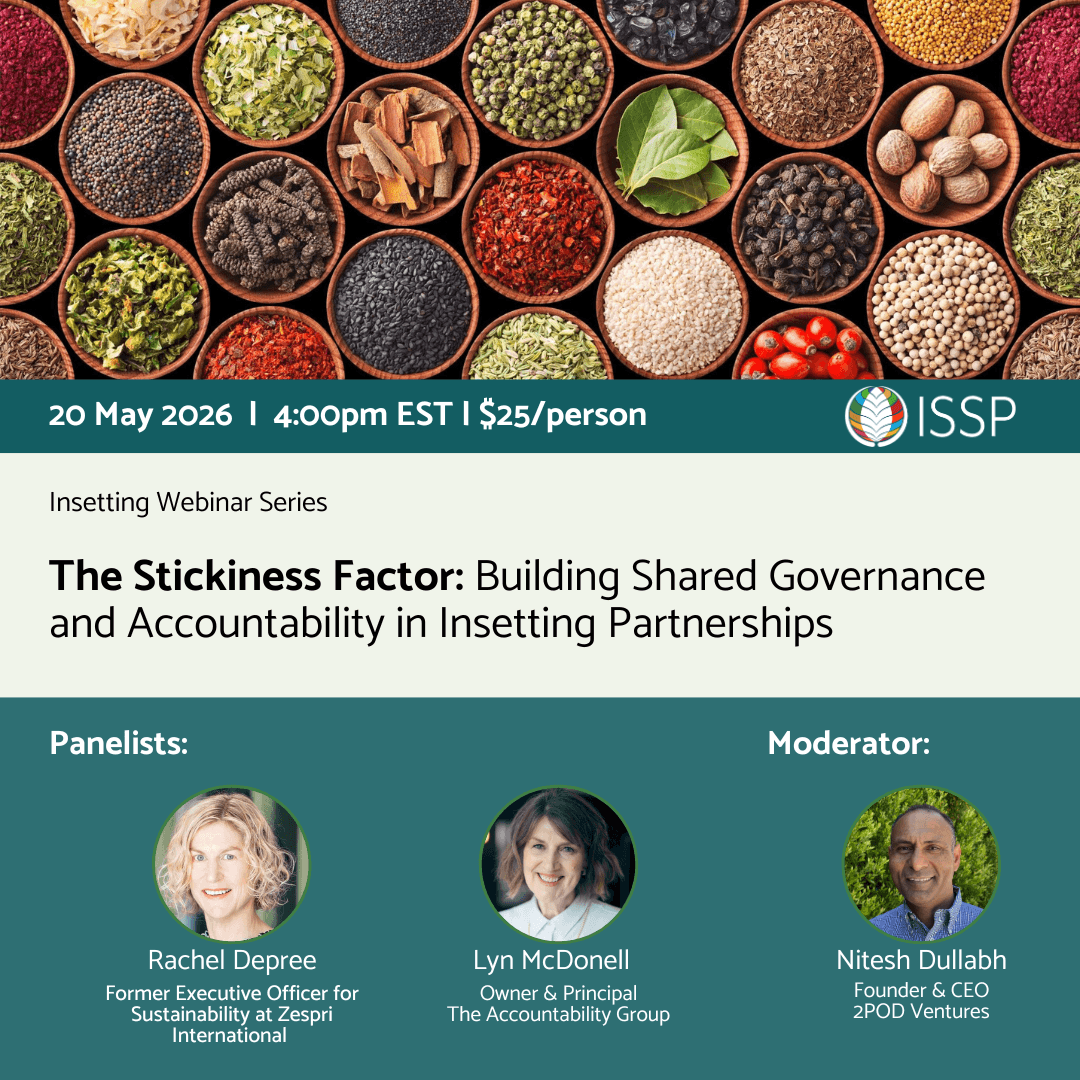
As more companies look to insetting as a pathway for Scope 3 action, regenerative agriculture, producer resilience, and supply chain transformation, one question becomes increasingly important:
What makes these partnerships last?
Good partnerships do not become sticky by goodwill alone. They become sticky through governance, accountability, shared ownership, and trust.
This webinar will explore how partnerships can move beyond pilots and good intentions toward regenerative models that benefit companies, producers, communities, ecosystems, and supply chains. We will look at the governance gaps that often weaken partnerships, including unclear accountability, limited producer voice, fragmented MRV, weak decision-making structures, and the absence of a common language across partners.
Key takeaways for participants will include:
-
How good governance is the operating system of credible insetting partnerships in our fragile supply chains
-
How to design shared accountability across buyers, producers, NGOs, platforms, and financiers to structure design change in our ecosystem
-
Why producer voice, benefit-sharing and transparency must sit at the center of high-integrity insetting
-
How MRV can support trust and traceability without overburdening producers
-
What credible partnership governance may need to look like over the next three to five years
The time is right to move the financial and commercial value of insetting from isolated projects to trusted, scalable, and regenerative partnership models. I look forward to this important conversation and to exploring how we build partnerships that are ambitious, durable, and regenerative.
Meet your Panelist

Nitesh Dullabah, (Moderator)
As the Founder and CEO of 2POD Ventures, a sustainability advisory firm, Nitesh designs and leads innovative public-private-philanthropic partnerships (PPPs) that accelerate regenerative insetting and climate-positive outcomes across value chains. He is deeply committed to advancing supply chain resilience, stakeholder governance, and inclusive impact strategies that align economic growth with planetary health. Nitesh is also an adjunct professor at Presidio Graduate School, where he mentors future sustainability leaders in collaborative systems design, regenerative agriculture, and cross-sector partnership development.

Rachel Depree
Rachel Depree has extensive global experience leading the integration of sustainability to drive business value.
Most recently she was the Executive Officer for Sustainability at Zespri International, the world’s largest marketer of kiwifruit, selling in more than 50 countries and returning NZ$3bn value to its growers in 2025. There she led the embedding of sustainability into Zespri’s global business strategy and supply chain with a focus on value from nutrition, climate and packaging.
Through this work and as chair of the Sustainability Council of the International Fresh Produce Association, she understands the importance of governance in leading complex change. She is passionate about agri-business, particularly the role of the horticulture sector in delivering returns to growers, the environment and communities.
She is a seasoned sustainability professional, with over 20 years' experience in senior business, industry and government roles in New Zealand and Europe.

Lyn McDonell
Lyn McDonell, MA, FCMC, C.Dir., is the Principal of The Accountability Group, Inc. based in Toronto, Canada. With two decades of experience, she has trained directors across sectors to strengthen governance, decision-making, and dialogue in an increasingly uncertain world.
A contributor to The Handbook of Board Governance (2nd and 3rd editions, Wiley), Lyn is a Fellow of the Institute of Certified Management Consultants of Ontario and a Chartered Director. She has served as CEO, COO, Board Chair, and Director, bringing practical insight to her work. Lyn also serves as adjunct faculty in York University’s Master of Financial Accountability program.
Lyn seeks to equip boards with the systems thinking and ecological literacy needed to transition to regenerative leadership, ensuring their organizations contribute to the long-term health of whole systems.
Continuing Education Requirements
ISSP credential holders will earn 0.5 CEU's for attending this working session.
Recording
This is an interactive working session and will not be recorded.
Please note that your link to join will only be emailed to you after registration.